
Checking Criminal History in Irmo
An Irmo search works best when the record is traced from its creator. The police report, town docket, county booking, higher-court file, and SLED response are different products. A name alone does not show which side of the county line handled an event.
- Identify Irmo Police and the precise incident location from the report number, citation, or other official paper.
- Ask Irmo Police for the incident or arrest report using the date, location, and report number.
- Call Irmo Municipal Court to check a town case, especially while its web violation search remains unavailable.
- Route booking and county-court research to Richland or Lexington County according to where the arrest occurred.
- Use SLED CATCH for a broader South Carolina name-based history after checking the local records.
The statewide product does not replace an Irmo narrative or municipal docket. Likewise, a town court result does not prove that no county-level prosecution exists.
Which County Holds Irmo Records
Irmo crosses the Richland and Lexington County boundary. This is the town's chief records trap. A Richland-side arrest can flow to Alvin S. Glenn Detention Center and Richland County courts. A Lexington-side event follows Lexington County booking, bond, and court channels. The town name remains Irmo in both cases, so a postal address or agency name is not enough to select the county database.
Start with the place of occurrence. Ask Irmo Police which county received the detainee, and read the county named on a citation, bond paper, warrant, or court notice. If a search in one county fails, do not conclude that the Irmo event never occurred. Confirm the location and try the correct county custodian.
Note: Irmo Police can identify its report, but county location controls the jail and higher-court route.
Irmo Police Department Records
Irmo Police is at 1239 Columbia Avenue, Irmo, SC 29063, and its main number is 803-781-8088. The department keeps the originating incident or arrest narrative for events handled by its officers. That report can supply the date, place, alleged conduct, officer, initial charge, and report number. Active-investigation details, juvenile material, victim information, and protected identifiers may be withheld or redacted.
The Town of Irmo official portal is the documented town and police access point.
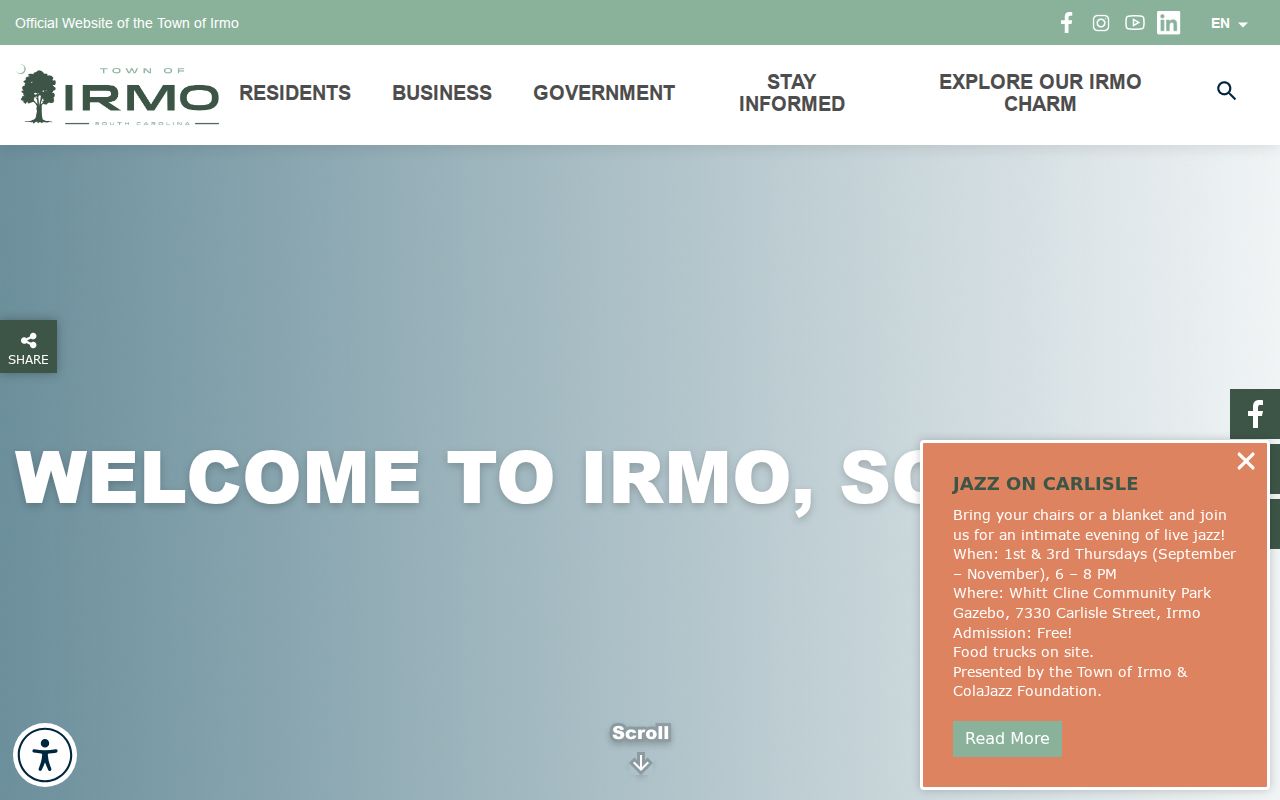
This town source should be used to verify current department contacts before submitting a request. Include a narrow date range and exact record type to help staff locate the Irmo file.
Before calling, collect the street or intersection, incident date, names as they appear on the official paper, and any report or citation number. Ask for the police narrative if the goal is to understand the officer-created event. Ask Municipal Court for the docket or disposition when the goal is the town case outcome. A county jail cannot supply the full Irmo Police narrative, and the police counter cannot certify a county General Sessions file. Matching the item to its custodian saves a round of referrals.
Who Holds Each Irmo Record
One Irmo event can leave several official trails. Choosing the custodian avoids requests sent to an office that never created the record.
| Record | Likely custodian | Key routing fact |
|---|---|---|
| Incident or arrest narrative | Irmo Police | The town agency created it |
| Town charge or ordinance case | Irmo Municipal Court | Confirm by court or citation number |
| Booking and current custody | Richland or Lexington County jail | County of arrest controls |
| Felony or higher prosecution | Correct county court | Use filed case and court identifiers |
| State criminal history | SLED CATCH | South Carolina name-based product |
The same charge may look different as it moves. An officer's first allegation, the filed charge, and the final disposition should not be treated as interchangeable.
Irmo Arrests and Bookings
No official town jail was identified for Irmo. The practical booking question is therefore county location. Richland-side detention goes to Alvin S. Glenn, while Lexington-side records belong to Lexington County. A current jail query describes custody, not the final court result. A person who bonded out or transferred may no longer appear in a live detainee search.
For an Irmo arrest in Richland County, the ASGDC lookup asks for first and last name plus a CAPTCHA and has no initial date-of-birth or booking-number field. Verify common-name results carefully. Historical booking records require a county request when the live portal no longer shows the person. For the officer narrative, return to Irmo Police even though custody moved to a county jail.
A later General Sessions or Summary Court record can show filed charges and disposition. The Richland County arrest lookup explains the county-side source chain for events that occurred on the Richland side.
Irmo's Two-County Footprint
Irmo covers 6.86 square miles. Census estimates place the whole town at 12,204 residents in 2025, up from 11,569 counted in 2020. Those figures include the complete town across both counties. They do not divide police reports or bookings between Richland and Lexington, and they should not be read as case or crime totals.
The compact footprint makes the county split easy to overlook. A short drive inside Irmo can cross the boundary while the town police agency remains the same. For records work, the location line on the incident report is more useful than the townwide population figure. It decides which county jail, bond route, and higher court should be checked after Irmo Police creates its report.
Municipal Court Records in Irmo
Irmo Municipal Court operates at Town Hall, 7300 Woodrow Street, Irmo, SC 29063. The mailing address is P.O. Box 406, Irmo, SC 29063. Call 803-781-7050 or use fax 803-749-2743. Town Code Chapter 20 grants the court magistrate-equivalent criminal and ordinance jurisdiction but no civil jurisdiction. The court record is the source for the city charge, events, plea, and disposition within that jurisdiction.
| Court name | Irmo Municipal Court at Town Hall |
|---|---|
| Jurisdiction | Magistrate-equivalent criminal and town ordinance matters, with no civil jurisdiction |
| Case lookup | Call the clerk; test official court channels, but do not rely on the unavailable violation search |
| Docket contents | Case identifier, charge, scheduled events, plea, disposition, and payment status as applicable |
| Copies and fees | Ask the clerk for the current method, availability, and cost |
When the web search is unavailable, the town clerk is the direct route for an Irmo Municipal Court record. Give the citation or case number when possible, then ask whether the matter is still pending, has a set court date, or has reached a disposition. If the clerk confirms that the charge belongs to a county court, use the court named on the official paper instead of trying to force the town portal to return it. Ask about the current copy method and fee before requesting a full file.
A jury demand must be made before trial. An Irmo municipal jury consists of six qualified town electors. That local rule belongs to a town case and should not be assumed to govern a county General Sessions matter.
When Irmo Search Is Unavailable
The official Irmo payment and violation interface was inspected with a clear status: “Search violations - Not Available.” It displayed a driver-license-number input and a state dropdown, but those controls should not be advertised as a working lookup. Portal visibility can change. Confirm the current status before entering data or planning a payment.
The official Irmo court search interface capture documents what was observed.
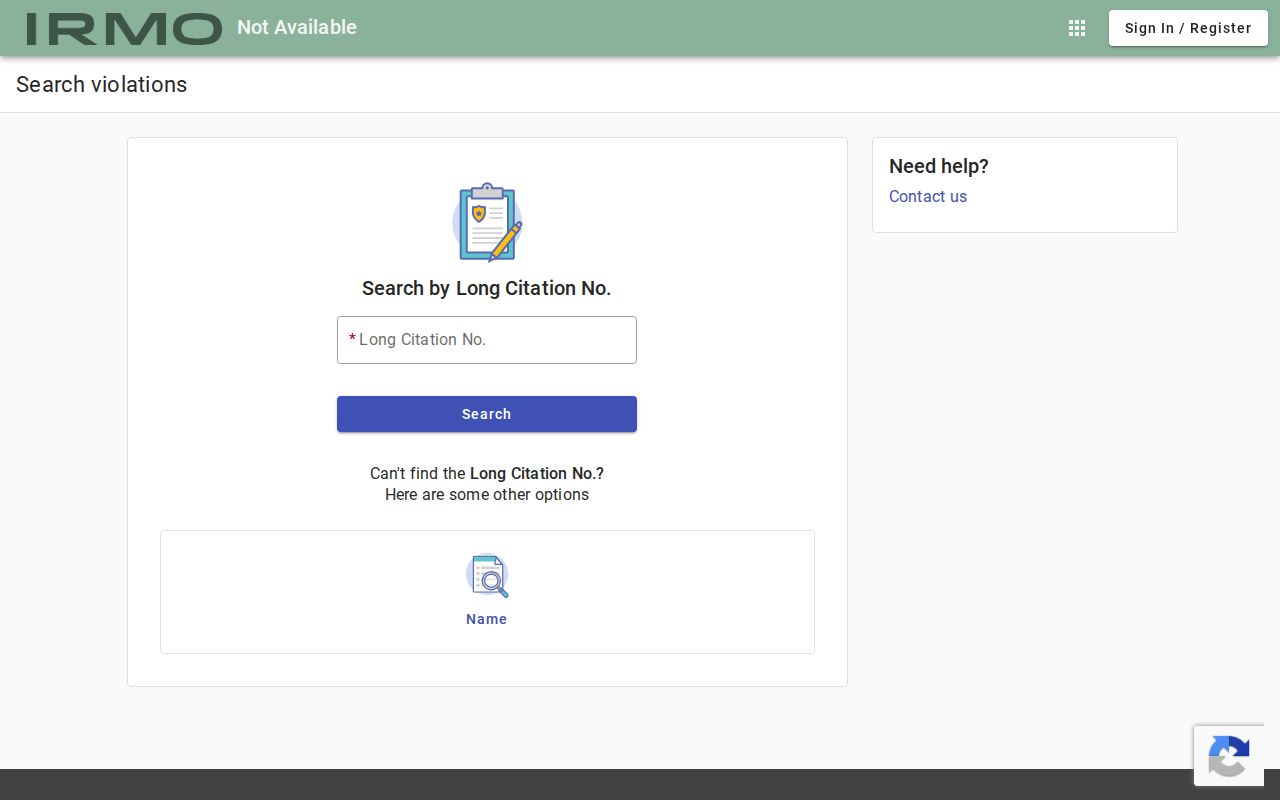
When the page still says unavailable, call Municipal Court at 803-781-7050. Provide the citation or case number, name, and scheduled date if known. Ask the clerk to confirm the balance, required appearance, and accepted method before paying. A web outage does not cancel a court date or resolve a warrant.
Irmo's Six-Person Jury
Town Code gives Irmo Municipal Court magistrate-equivalent criminal and ordinance power and provides for a six-person jury drawn from qualified town electors. “Magistrate-equivalent” describes the court's local level of criminal authority. It does not make the town court a Richland County Magistrates Court, nor does it give the court civil jurisdiction.
This distinction helps when reading an Irmo case. A town ordinance or assigned lower-level charge can remain in Municipal Court. A felony or other higher prosecution must move through the proper county system. Ask which court owns the case before requesting a certified result, because the town clerk cannot certify a county file it does not hold.
Where Irmo Records Go
Irmo Police creates the agency record first. If an arrest follows, the county of occurrence controls the detention and bond channel. A municipal charge stays with Town Court, while a higher prosecution enters the correct county court. Qualifying arrest and disposition information is later reported into SLED's state repository.
Record flow: Irmo Police › Irmo Municipal Court or Correct County Court › South Carolina Law Enforcement Division
Recent activity is usually clearest in the police report or current county custody source. Filed outcomes belong in the court docket. SLED CATCH adds a statewide name-based view, but it may lag a new event and does not reproduce every Irmo report or pleading. For a Richland-side felony file, use the Richland County criminal court case search.
When Irmo Sources Disagree
A jail result can vanish after release while the court case stays pending. The arrest charge can differ from the charge later filed. A dismissal may appear in the town or county docket before SLED pairs it with the arrest cycle. These timing differences are why no single Irmo search proves the entire history.
Write down the report, booking, and case identifiers from each source. Then compare the event date, agency, county, charge, and final disposition. If an official system appears wrong, contact that custodian with the supporting court order or source document. Do not send identity documents to a nonofficial service.
- Booking
- County jail intake after an Irmo arrest, not a finding of guilt.
- Disposition
- The court's recorded outcome for a charge or case.
- Case number
- The court identifier that is more precise than a name search.
- Nolle prosequi
- A prosecutor's formal decision not to continue a charge at that time.
Public Access Rules in Irmo
Irmo Police and town records are subject to South Carolina access law, but public access is not unlimited. Active-investigation material, juvenile files, protected victim data, personal identifiers, and records made confidential elsewhere may be withheld or redacted. A public body may charge actual costs for search, retrieval, redaction, and copies under the statute. Court access may follow separate rules and orders.
Key Statutes:
South Carolina Freedom of Information Act, §30-4-10 et seq. gives access to non-exempt public records and sets request, fee, and enforcement rules.
S.C. Code §30-2-50 prohibits obtaining or using government-held personal information for commercial solicitation and provides penalties.
S.C. Code §23-3-110 et seq. establishes SLED's criminal-identification and state repository functions.
State law allows segregation of releasable portions when other details are exempt. A focused Irmo request should state the date range, location, report or case number, and exact item sought. If the town does not hold it, ask which county or court received the record.